Asterix and Red Scripture denotes station in conversation with art piece.
Catholic *
Jesus is Stripped of His Garments.
23 When the soldiers had crucified Jesus, they took his clothes and divided them into four parts, one for each soldier. They also took his tunic; now the tunic was seamless, woven in one piece from the top. 24 So they said to one another, “Let us not tear it but cast lots for it to see who will get it.” This was to fulfill what the scripture says,
“They divided my clothes among themselves,
and for my clothing they cast lots.”
25 And that is what the soldiers did.
John 19:23-25
Methodist
On the Cross, Jesus Prays for Forgiveness.
(This is the only Methodist station that differs from the Scriptural Stations of the Cross, emphasizing the importance of Christ’s forgiveness on the cross in Wesleyan theology.)
32 Two others also, who were criminals, were led away to be put to death with him. 33 When they came to the place that is called The Skull, they crucified Jesus there with the criminals, one on his right and one on his left. [[34 Then Jesus said, “Father, forgive them, for they do not know what they are doing.”]] And they cast lots to divide his clothing. 35 And the people stood by watching, but the leaders scoffed at him, saying, “He saved others; let him save himself if he is the Messiah of God, his chosen one!” 36 The soldiers also mocked him, coming up and offering him sour wine 37 and saying, “If you are the King of the Jews, save yourself!” 38 There was also an inscription over him, “This is the King of the Jews.”
Luke 23:32-38
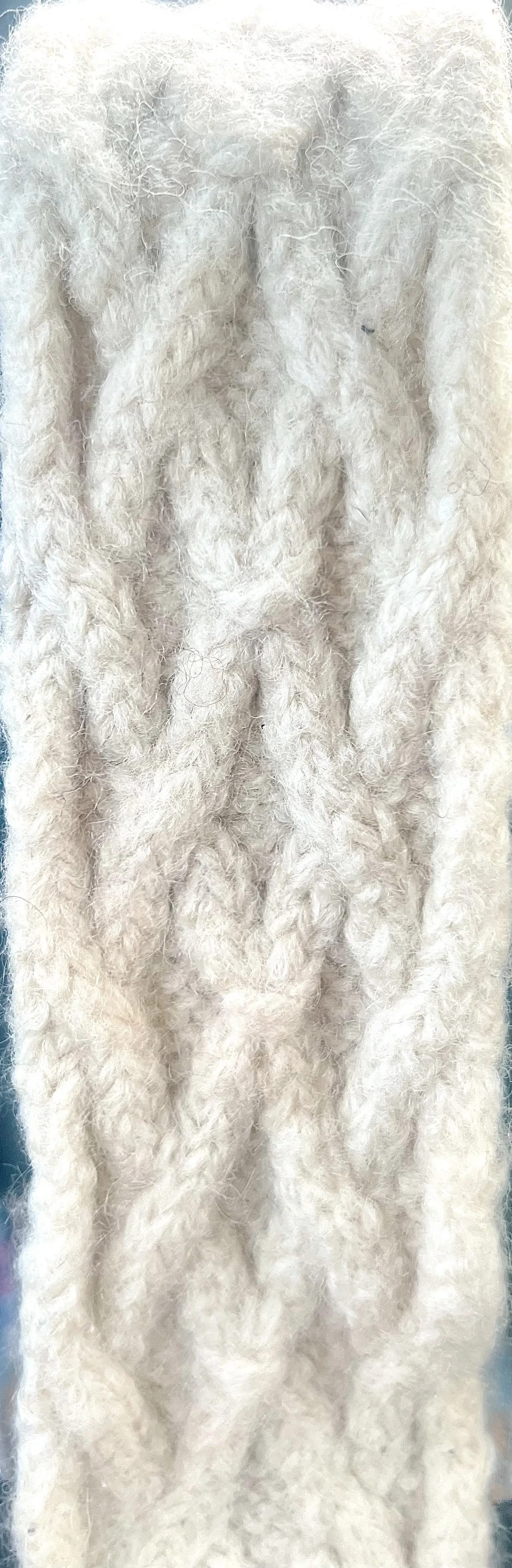
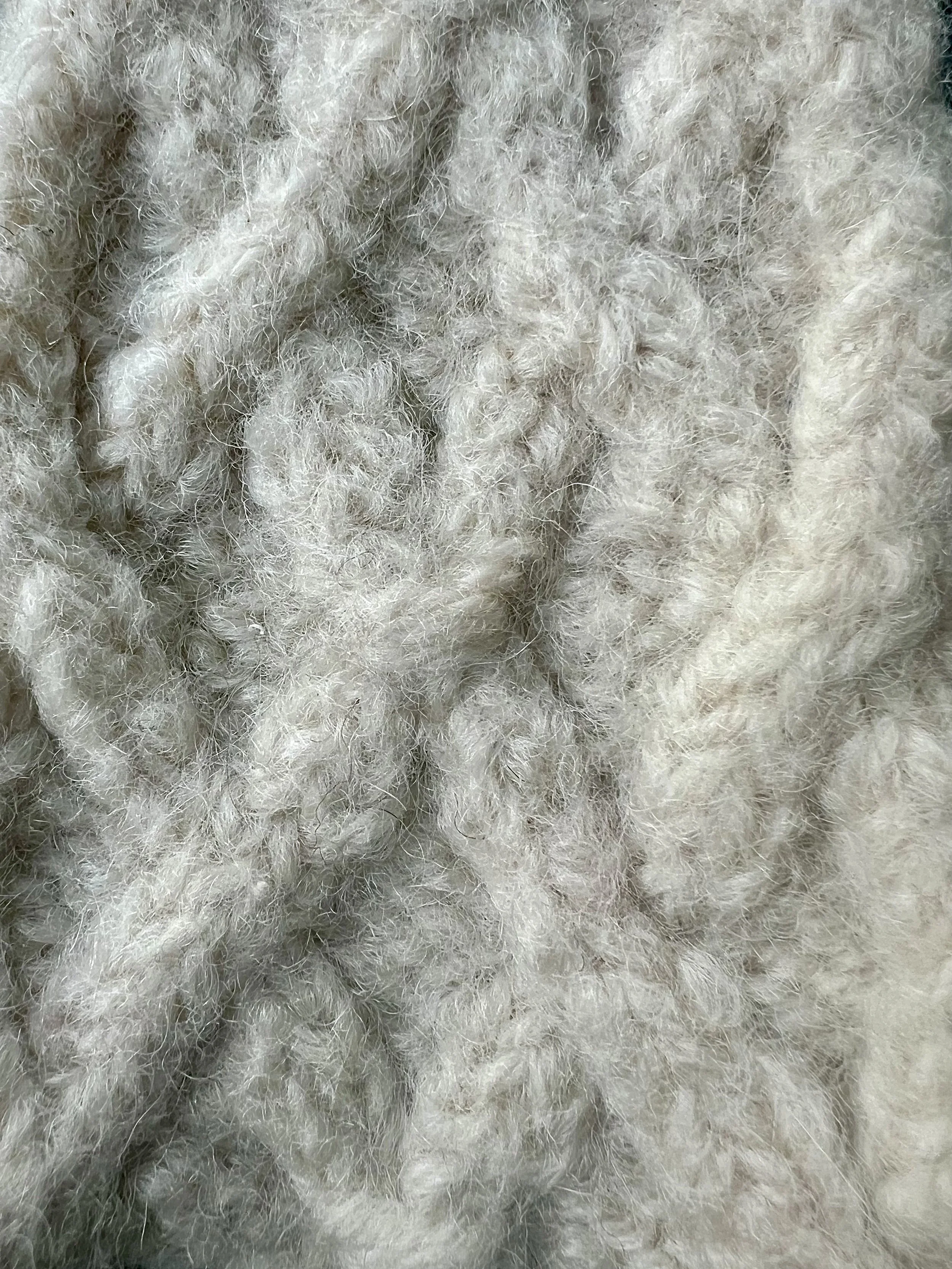
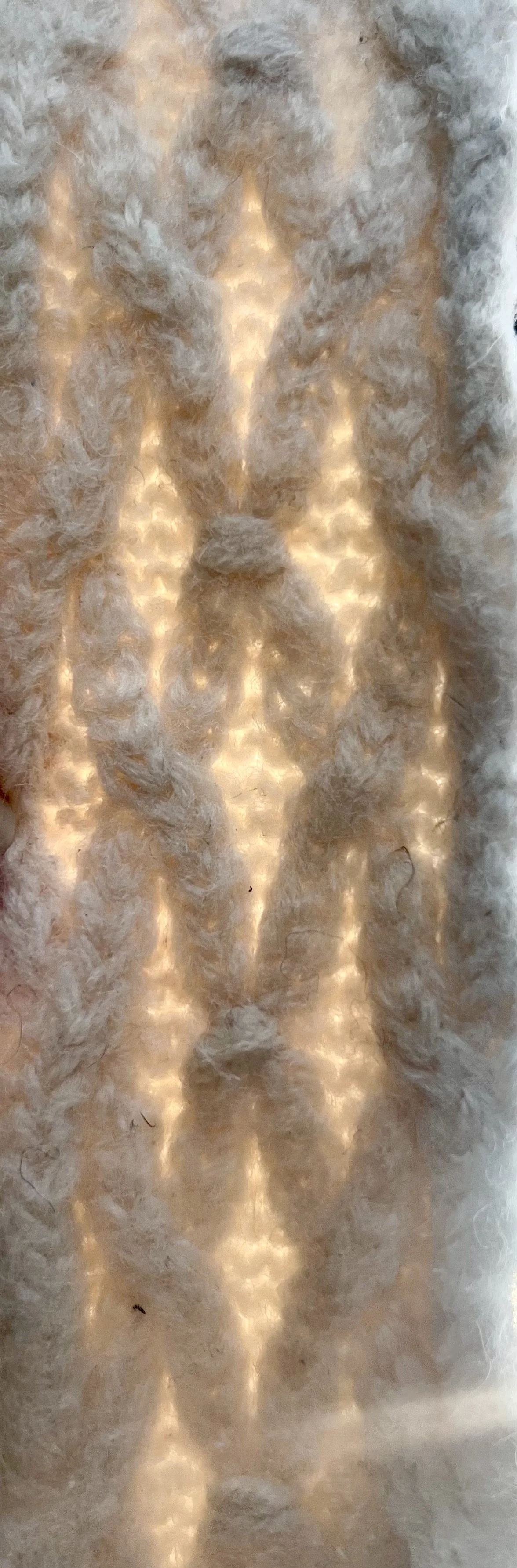
Artist: Desirée Adams
Artist Statement
Medium: Knitted Wool
Statement: The Apostle Paul often uses the imagery of putting on Christ as one would put on new clothing. Looking at these stations together, it is intriguing that one can see clothing being removed from Christ in one station so that the clothing which is Christ could be put on in the other.
Wool has an obvious symbolic connection to Christ - the coat of the sacrificial Lamb of God who takes away the sins of the world. The wool here is knitted in a Celtic pattern often worn by fisherman of Ireland and Scotland to protect them from elements of nature such as rain, snow, ice, salt water, and cold. Elements that caus illness and death. After I made this, I wore it in the snow and cold as well - which is where wool takes on almost magical properties. It was wet and icy on the outer side, yet it kept me warm and managed to wick away moisture from my skin. Unlike other materials, the fibers of wool bind more strongly together when facing adverse conditions. Even in heat, it is strengthened (even if made smaller) by pulling closer together. Wool fiercely protects yet also allows skin to “breathe,” it reduces odor, and is simply, though not always easily, repaired. It is also not a quick and easy creation (not for me). It takes time and labor. Wool products are created intentionally over time with great attention and care - from the raising of sheep and sheering, the spinning of yarn, and knitting yarn into this pattern with no seams.
How does Christ’s love work the same? That’s what I’ve been thinking about. How does the lamb symbolize ancient sacrifice AND the wool with which we are covered? How does Christ’s forgiveness (a single tunic of single weaving without breaks of seams) fiercely protect us not just from what we knowingly do, but what we unknowingly do as well, and offer simple repair to those who seek it?